
The plan for every warehouse shift, a week ahead.
Put the day's waves in and the team in, and Outlay 3PL builds the plan: who is on, where they work through the shift, and the orders, overtime and briefings it takes to stick to it.
A Libra Europe product
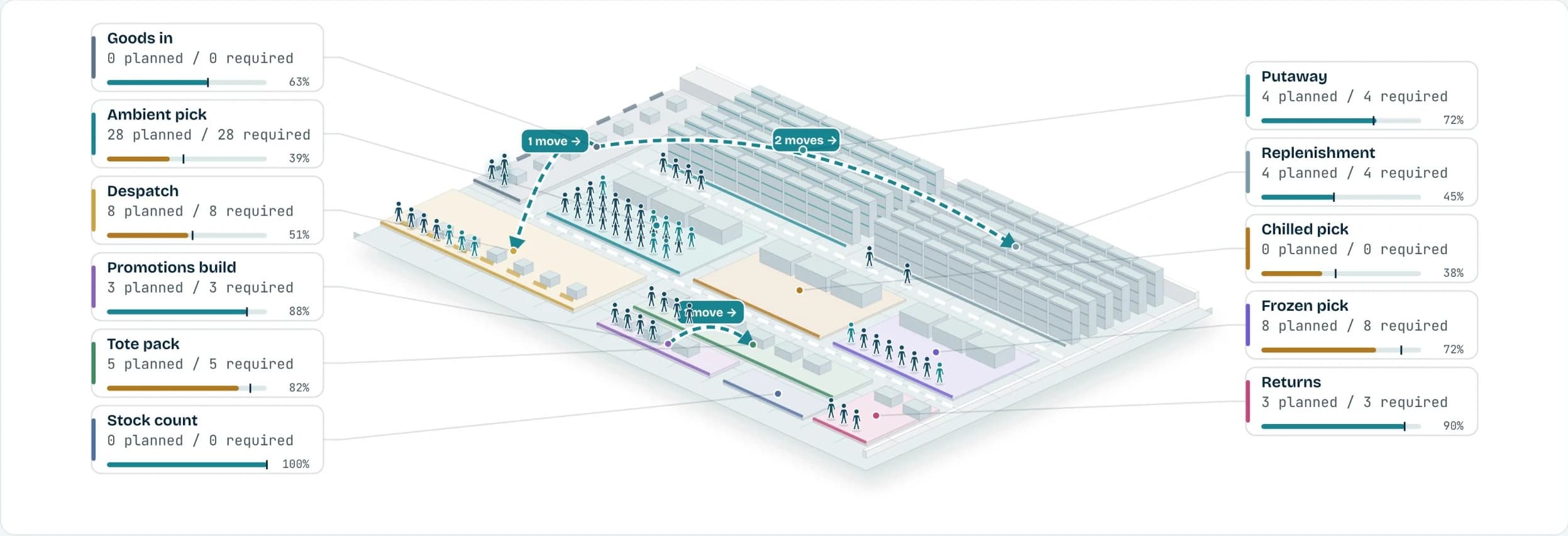
Seven days, three shifts, and a plan for each one.
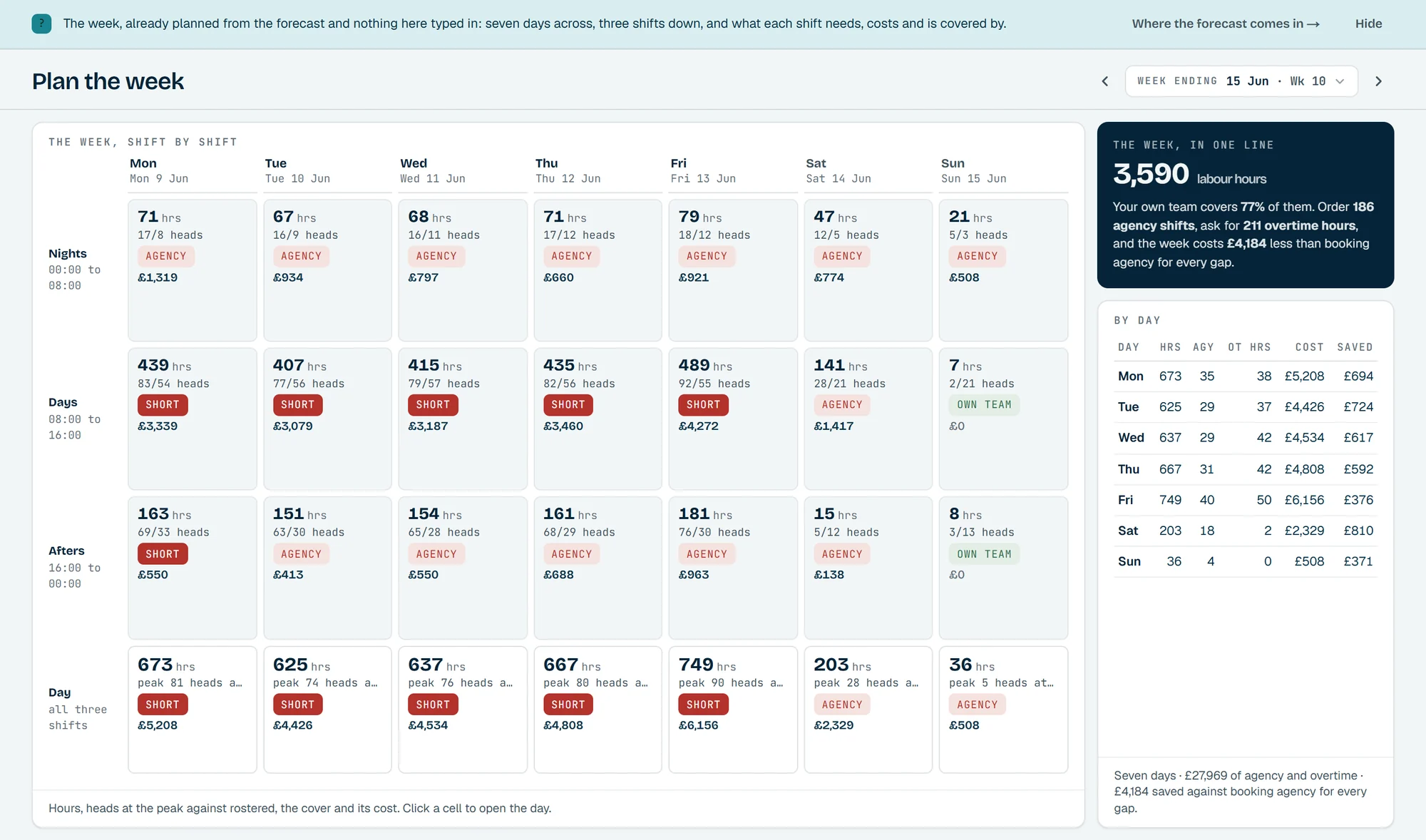
The week, costed by shift
Each cell is one shift: the labour hours it needs, heads at its busiest quarter hour against heads rostered, whether your own team, overtime or agency covers it, and the cost.
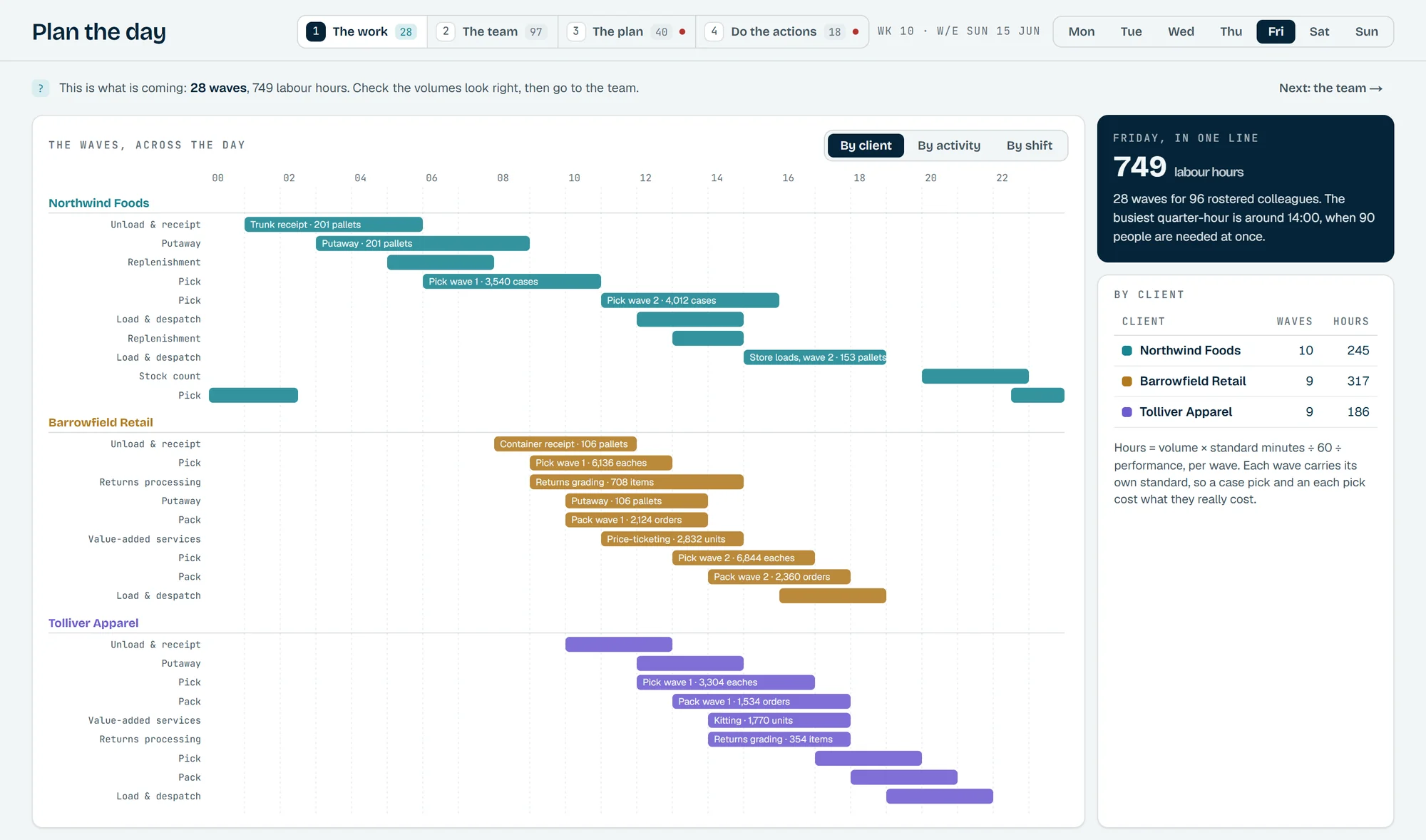
The waves, client by client
Every wave the WMS has released for the day, laid out by client, activity or shift, so the shape of the day is clear before the team is set against it.
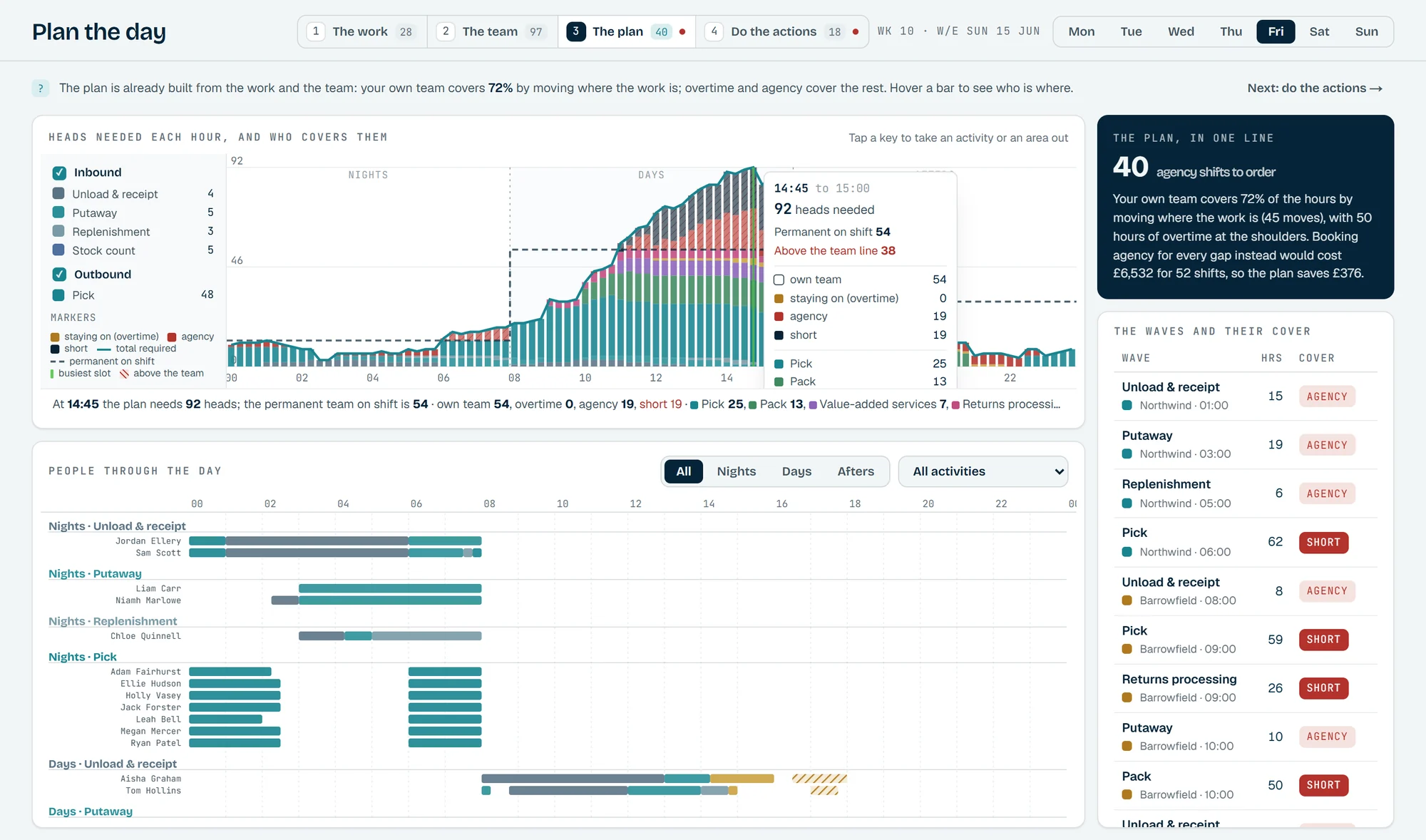
Heads needed every quarter hour
The waves become demand by activity through the day, set against the roster as a dashed line, with each colleague's day laid out underneath in the colour of the work they are on.
The list of things to do
Agency orders by supplier at their rate and notice, overtime asks, roll-call briefings and licence renewals, drafted from the plan and ticked off one at a time.
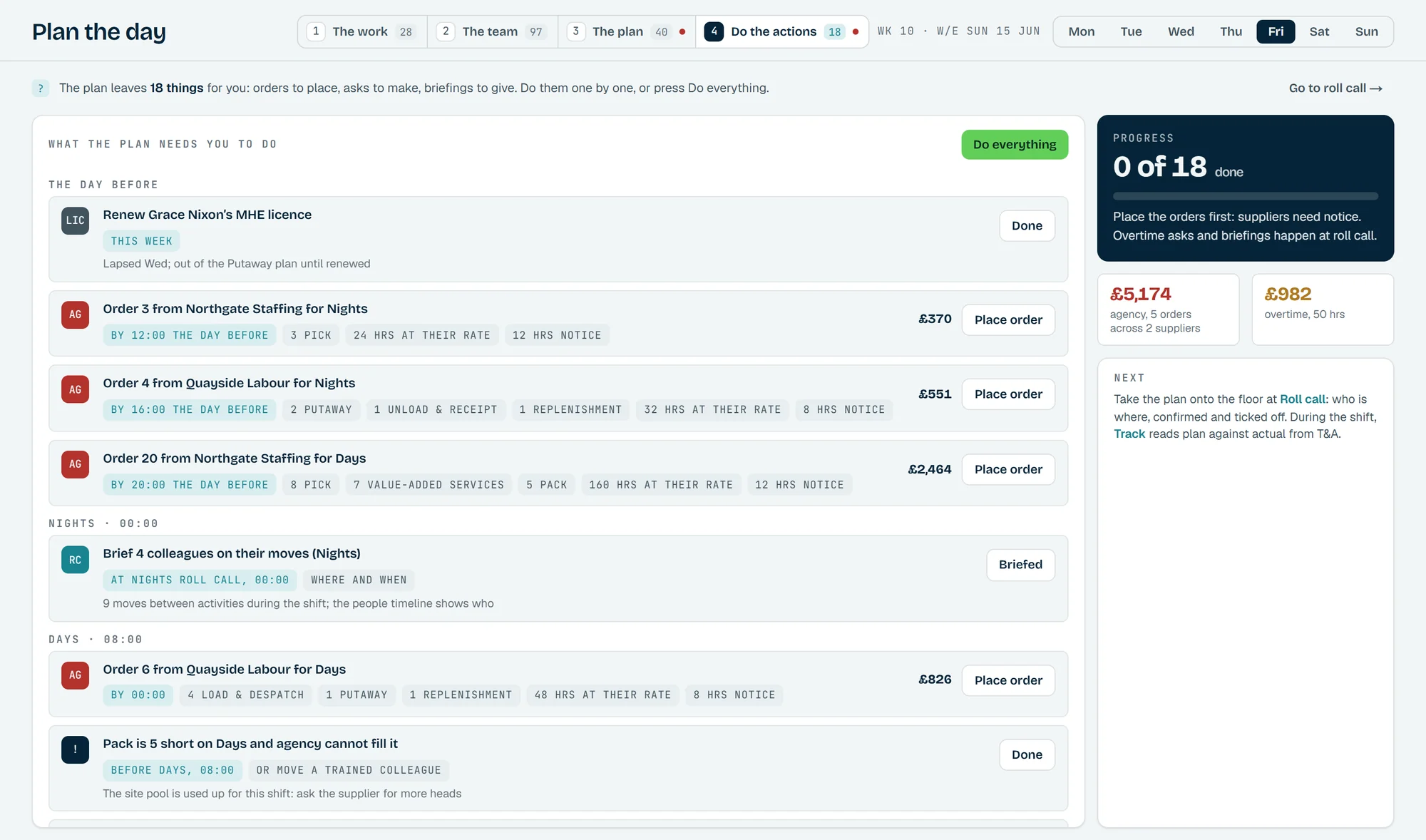
A Friday on the floor, from the first wave to cover.
Step 1 of 4: Waves release from the WMS.
Each wave lands with its client, activity and volume, and the zone it needs lights up.
Who covers a gap, cheapest first.
When the work outruns the roster, the plan reaches for the next cheapest source of hours and stops as soon as the gap is closed.
- 1
Home activity
Each colleague works their own activity wherever the waves keep them busy.
- 2
A skill-checked move
A colleague trained for the short activity moves across, with ten minutes allowed for the walk.
- 3
Overtime
The shift that is ending is asked to stay on, priced at its overtime rate.
- 4
Agency
Whatever is left is booked by skill from the supplier with the lowest rate for that skill.
The rest of the shift, from roll call to sign-off.
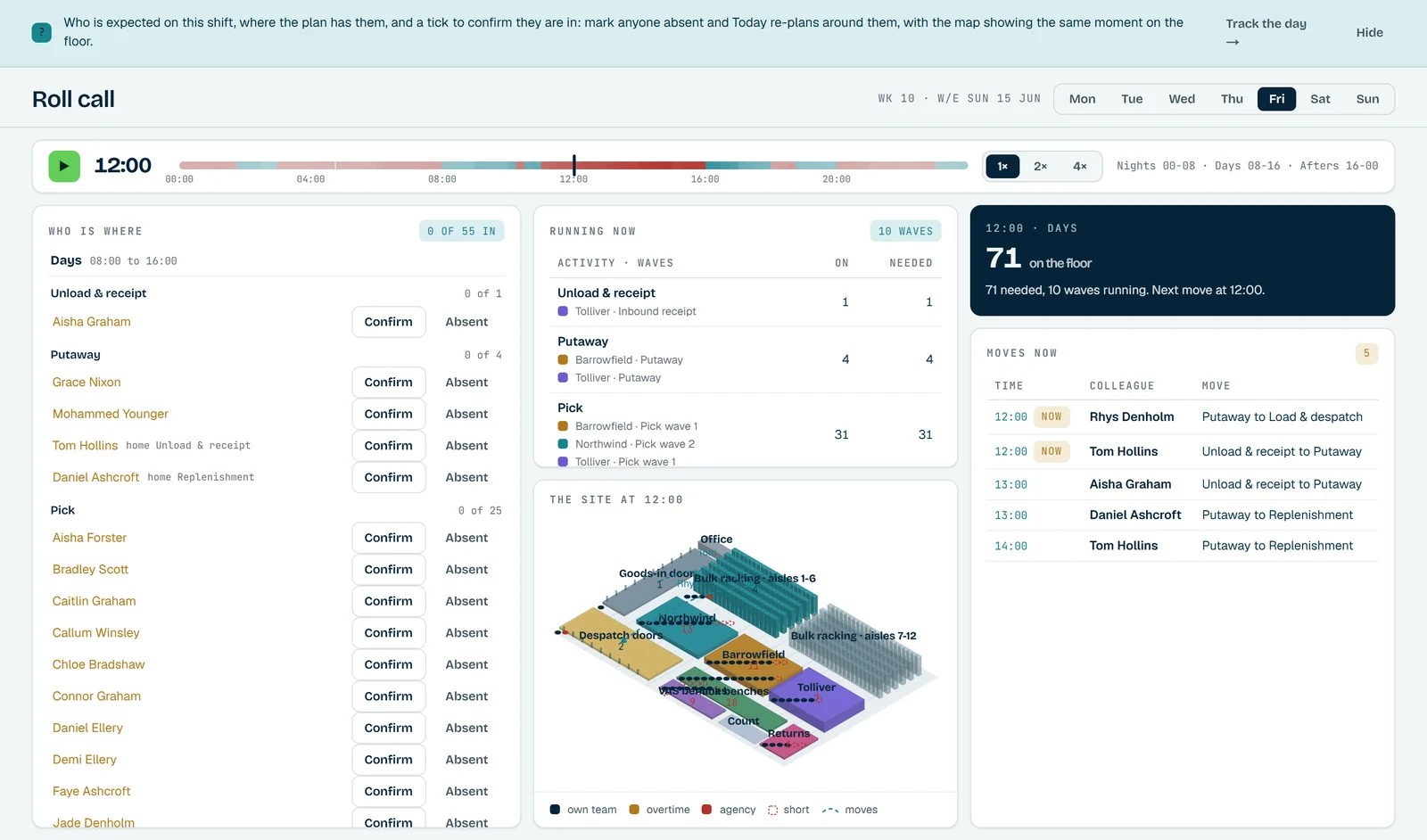
Roll call
Who is expected on the shift that is on, where the plan has them, and the site map at the same moment.
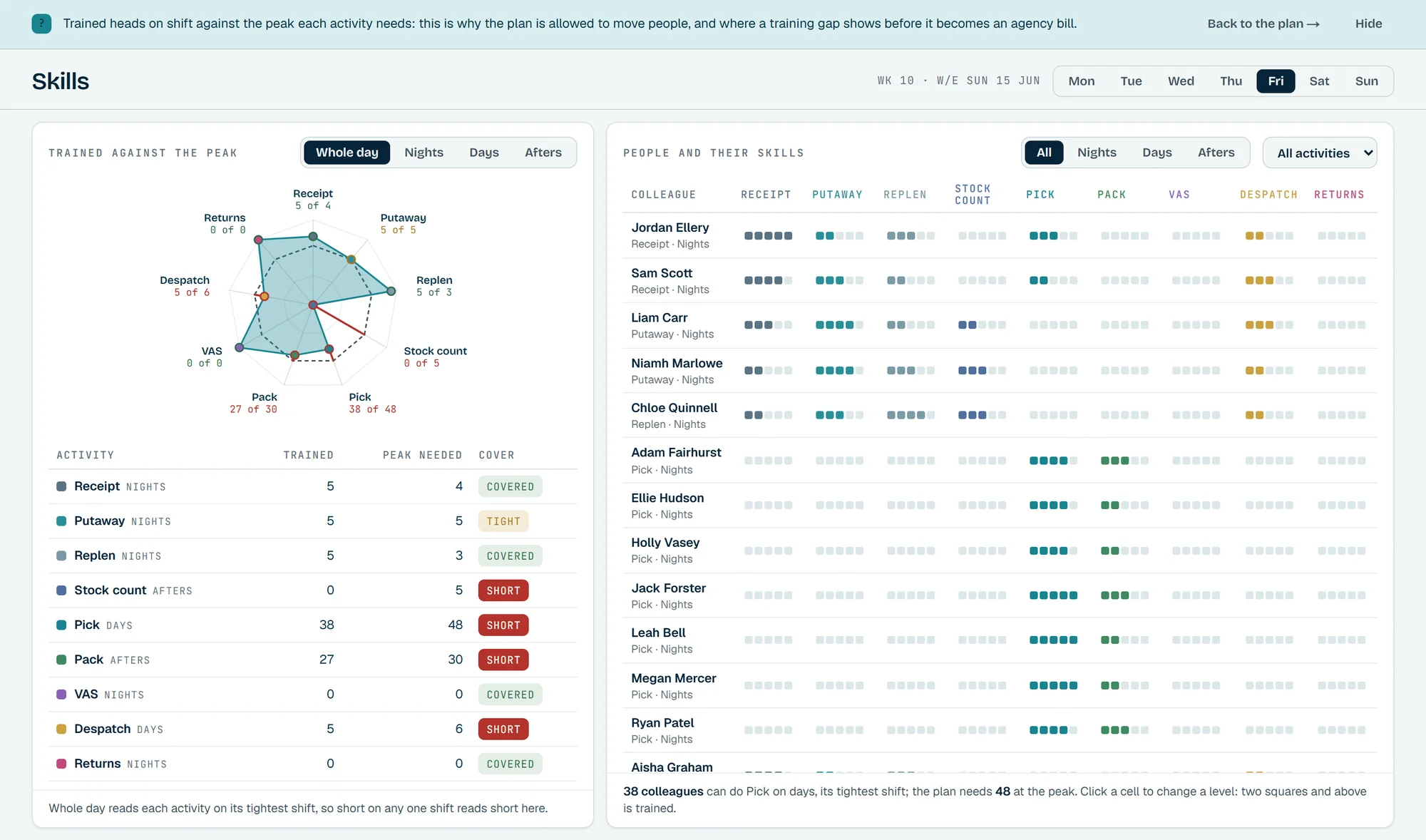
Skills against the peak
Trained heads on shift against the peak each activity needs, and every colleague's skill levels.
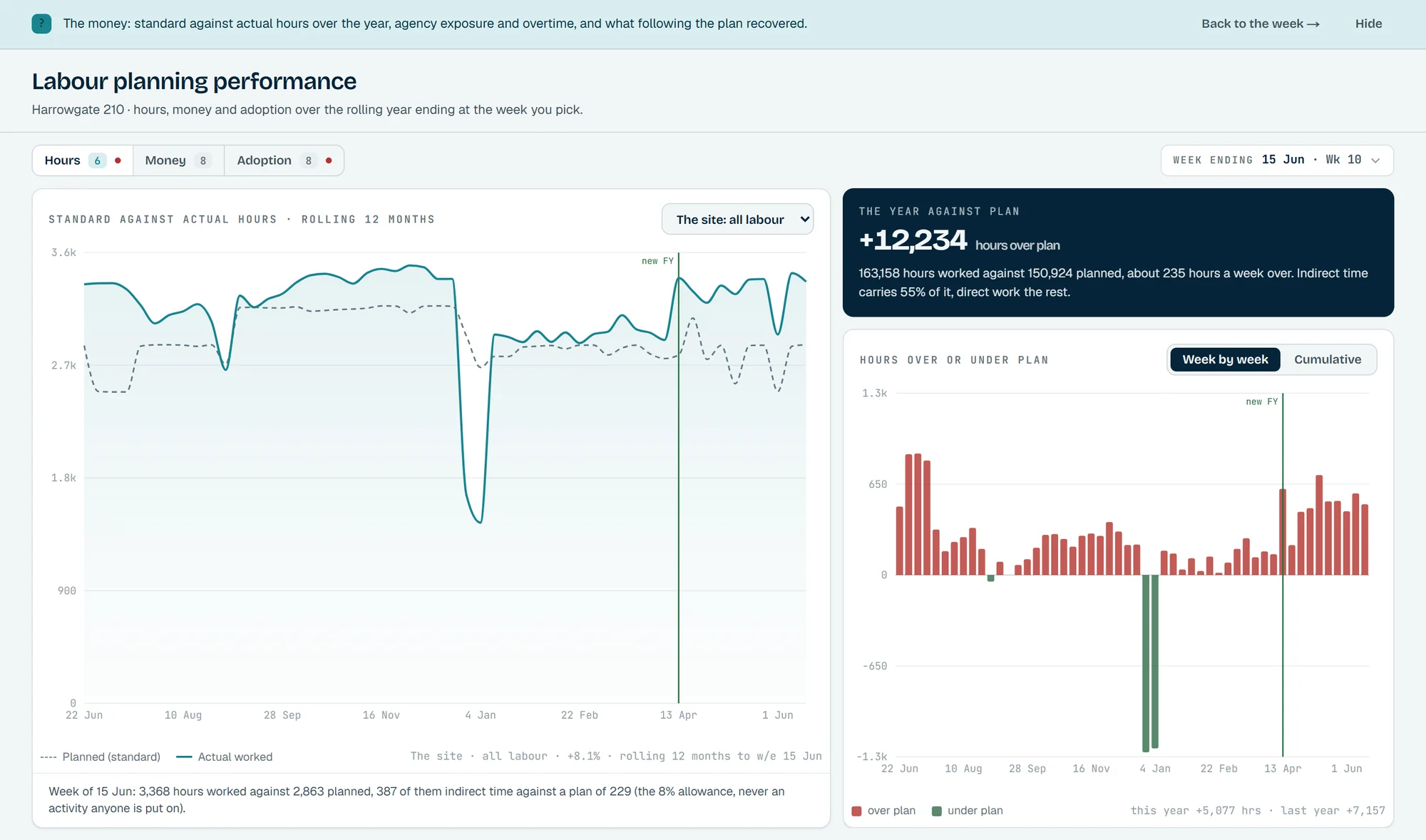
Reporting
Standard against actual hours over a rolling year, and the weeks over or under plan.
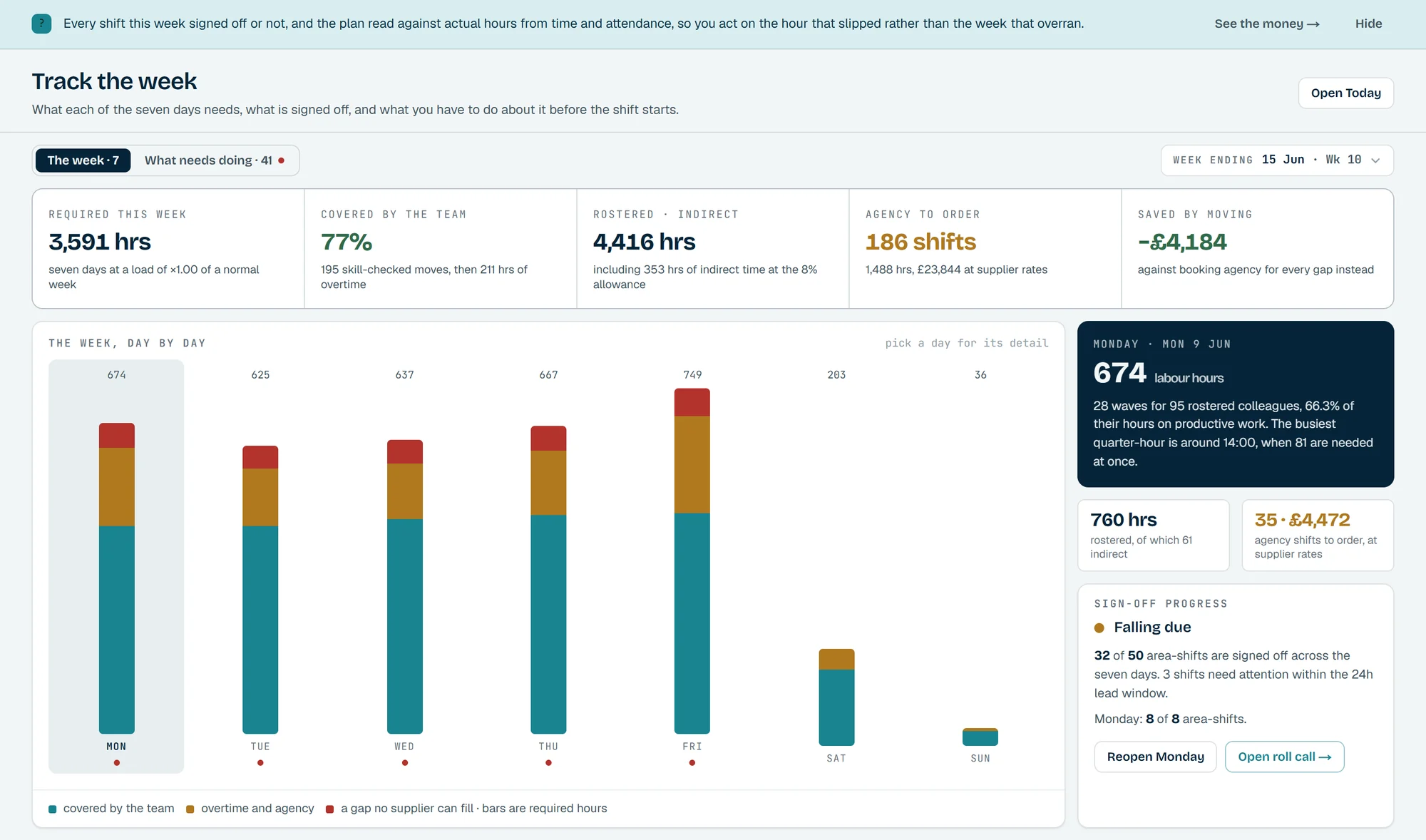
Track the week
What each day needs, what is signed off, and what to do before the next shift starts.
What warehouse managers check before they rely on it.
Do we have to build the plan by hand?
Where does the work come from?
What about breaks, cleaning and training?
What data do we need?
How do new managers learn it?
One Outlay model of work, people and cost, in three products.
One Outlay model of work, people and cost, in three products: Outlay schedules a factory, Outlay Labour plans its labour hour by hour, and Outlay 3PL plans and runs a warehouse's shifts.
Outlay
Production scheduling
Turns demand and master data into a production schedule planned against real machine and labour capacity, then costs every run live against standard.
Visit the Outlay siteOutlay Labour
Labour planning by the hour
Turns forecast volumes into the heads each area needs through the day and sets them against the team on shift, so agency covers only what is left.
Visit the Outlay Labour siteOutlay 3PL
Warehouse shift planning
Turns the waves your WMS releases and the team on shift into a labour plan for every shift of the week, and shows the shift live on a map of the site.
You are on the Outlay 3PL site
Plan your own warehouse in Outlay 3PL.
Talk to Libra about a scoping day at one site: the activities, the shifts, and how labour is planned and rostered there today.
Talk to Libra about Outlay 3PL
Choose a site and a date, and bring the people who plan and roster labour there today.